You’ve Covered It Long Enough
Makeup every morning. Long sleeves in July. The same good angle in every photo. If a scar has shaped how you show up, you’re not alone. Acne scars, surgical marks, and old injuries can stay visible for years after the skin has closed.
Laser scar removal in Beverly Hills works below the surface of a scar. At Rodeo Drive office, Dr. Salar Hazany uses laser treatment to reach below the surface of a scar. The laser breaks up old scar tissue and triggers new collagen, so your skin rebuilds smoother and more even over the months that follow.
Dr. Hazany is a board-certified dermatologist and fellowship-trained Mohs surgeon, and patients from across Los Angeles see him for laser scar removal. Scars are all we treat, so laser is one tool inside a full scar revision plan, not a one-size-fits-all package.
Not sure where to start?
See the Difference, Not Just Hear About It
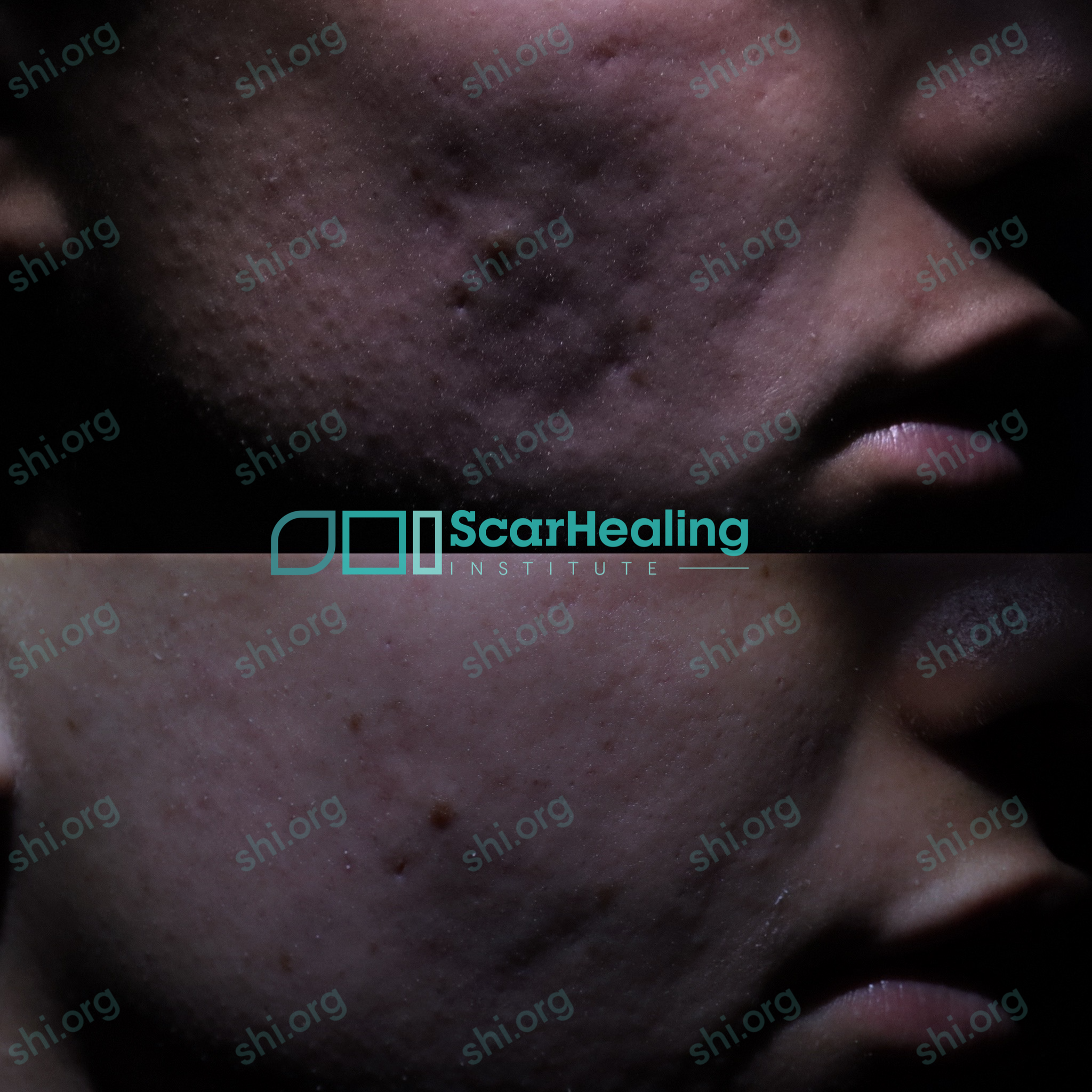
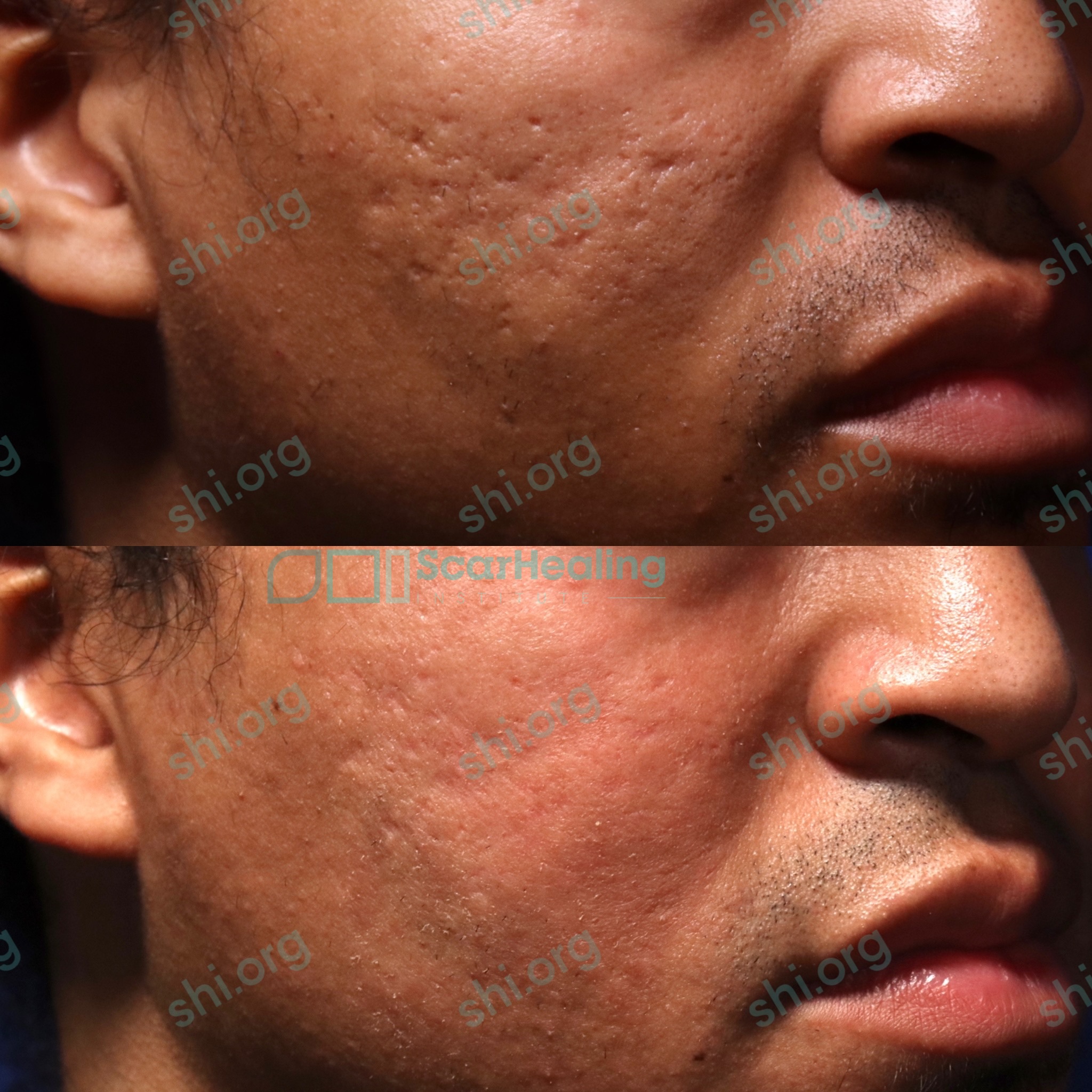
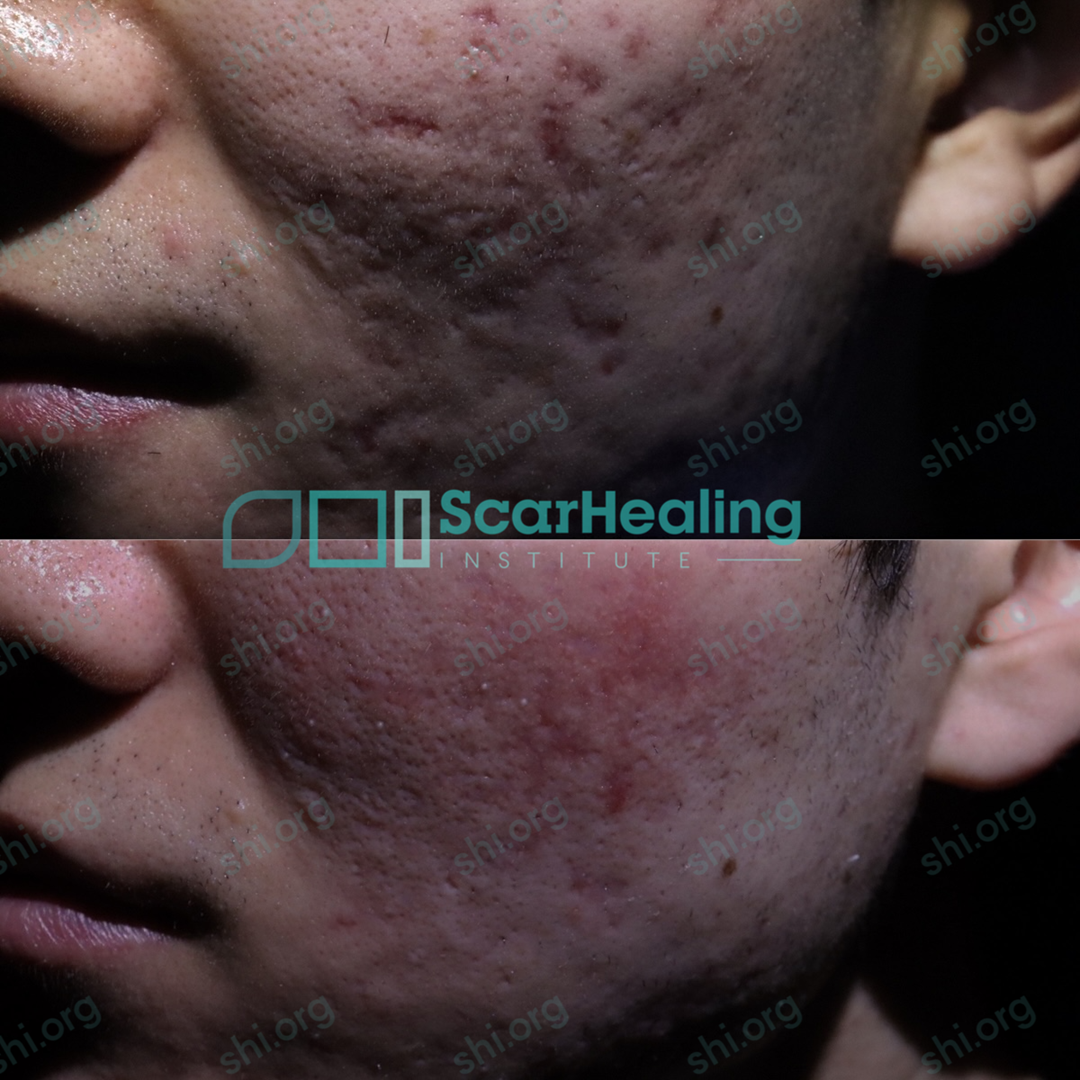
Photos show you more than any description can. Browse real results from patients who treated acne scars, surgical scars, and injury scars with us. For more, our full before and after gallery is sorted by scar type.

Is Your Scar a Candidate for Laser Treatment?
Most scars can improve with laser. How much they improve depends on the scar’s type, depth, and age. Here’s how laser fits each one.
Rolling, boxcar, and shallow ice pick scars leave dents and uneven texture. Laser smooths the surface and softens the edges so light hits your skin more evenly. For deeper scars, laser is usually the last step in our Acne Scar Phase-Out System, after other acne scar treatments like subcision or Phenol CROSS lift the scar from below.
C-section, tummy tuck, and other surgical scars can stay red, wide, or raised long after you heal. Laser fades the color and blends the texture into the skin around the scar. Newer scars often need time to settle first, so Dr. Hazany will tell you when the timing is right.
Cuts, falls, and accidents can leave scars with rough texture, uneven color, or a raised line. Laser resurfaces the area in stages so the scar sits flatter and blends in. Some injury scars do better when laser follows another step, like dermabrasion or excision.
Burn scars often mix rough texture with patchy color. Some pull the skin tight enough to limit movement, which are called contracture scars. Over a series of sessions, laser can soften stiff tissue, smooth texture, and even out tone.
Hypertrophic scars are thick, raised scars that stay inside the edges of the original wound. Laser helps flatten and fade them, and it often works best paired with injectable scar treatments. If your scar has grown past the wound’s edges, it may be a keloid, which usually needs injections before laser.
Have a scar that doesn’t fit neatly into one group? That’s common.
Real Patient Stories
Patients rate us 4.9 stars on Google. Here’s what they say about their care, in their own words.
Want to hear more? Read our patient testimonials.
Your Scar Is Unique. So Is Your Plan.
No single laser works on every scar. Dr. Hazany picks the laser and its settings based on how deep your scar sits, whether texture, color, or thickness bothers you most, and your skin tone.
Removes very thin layers of skin with precise control. A good fit for shallow acne scars and rough texture, with a shorter recovery.
Reaches deeper to break up dense scar tissue and drive stronger collagen growth. Used for deeper scars and bigger texture changes.
Releases energy in quick bursts. Helpful for rolling and boxcar acne scars.
Heat the skin below the surface without removing any. Best for lingering redness, dark marks, and raised surgical scars, with little downtime.
Many plans combine two lasers, one for texture and one for leftover redness. When laser alone won’t do enough, Dr. Hazany may add peels, fillers, or dermabrasion so each part of the scar gets the right tool.

Your Recovery, Day by Day
Downtime depends on the laser. Non-ablative treatments usually mean a day or two of redness. After an ablative laser like CO₂ or Er:YAG, here’s the typical path:
- Days 1 to 4: Redness, mild swelling, tightness, and light crusting. You’ll apply an over-the-counter ointment, as directed by your provider.
- Day 5 onward: Switch to a gentle moisturizer as directed.
- Days 7 to 14: Crusting sheds on its own and pinkness fades. Most skin heals within 1 to 2 weeks.
- Months 3 to 6: New collagen keeps building, and this is when most patients see the biggest change.
Keep treated skin out of the sun while it heals. It’s the best way to avoid dark spots. Before treatment, skip tanning for 1 to 2 weeks, pause retinoids as directed, and tell us if you get cold sores or have taken isotretinoin.
What to Expect During Your Treatment & Recovery Process
During your appointment, we apply controlled laser energy to the scarred areas to break down damaged tissue and encourage healthy skin regeneration. Depending on the laser used, we may also apply a topical numbing cream. The laser creates micro-channels that your skin later fills with new collagen, and you may feel warmth or a light snapping sensation.
Here’s what you can expect as your skin heals:
- Right after treatment: Redness, warmth, or mild swelling is normal
- Days 1–3: Skin feels tight and may develop a light crust as it begins to repair
- Days 4–7: Scabs naturally shed; continue gentle moisturizing and sun avoidance
- Week 2: Pinkness fades as smoother, fresher skin becomes visible
- Weeks 4–8: Texture and tone continue to improve as collagen develops
- Months 3–6: Ongoing refinement reveals softer scars and a more even complexion
Depending on the type of laser used, there may not be any recovery downtime following the procedure.
Why Patients Travel Here for Scar Revision
Scars are our whole focus, not a side service. Many patients come to us after other treatments fell short.
- Mohs-level precision: Dr. Hazany was Chief Resident at Harbor-UCLA Medical Center and completed a Mohs surgery fellowship. Mohs is careful, layer-by-layer work, and that same care guides every laser setting.
- Proven results: More than 5,000 patients treated and a 4.9-star Google rating.
- A system for acne scars: Our Phase-Out System treats scars in order, so laser refines a smoother base.
- Care for every skin tone: Lasers and settings are adjusted to protect the skin around your scar.
Our office sits at 421 N. Rodeo Drive, Suite T-13. Patients also visit from across Southern California, including Manhattan Beach, Calabasas, Newport Beach, and Irvine.
Areas We Serve Throughout Southern California
We provide advanced laser skin resurfacing treatments to patients across Southern California, including: