SCAR HEALING & ACNE SCAR TREATMENT PROCEDURES

Acne Scar Treatment Santa Ana

Acne Scar Treatment Santa Ana

Clearer Skin Starts Here

Expert Acne Scar Treatments in Santa Ana Backed by Results.

After battling acne, the last thing you want is to be left with stubborn scars. For acne scar treatment in Santa Ana, the Scar Healing Institute provides personalized, science-backed care that targets and smooths scars, helping you work toward a more even complexion.

Scar healing is complex, but your care shouldn’t be. Here’s how we make it manageable and effective:

  • Care starts with a thorough assessment to identify your exact scar types and priorities.
  • We combine the right modalities for your case (e.g., subcision, laser, CROSS, injectables, regenerative care).
  • Each visit includes clear guidance on prep, aftercare, and expected recovery.
  • Progress is tracked with photos and check-ins so we can fine-tune your plan.

If acne scars are holding you back, we’re here to help you move forward with confidence.

We also offer acne scar treatments in IrvineAnaheim, and Long Beach.

Schedule your consultation at the Scar Healing Institute today to say goodbye to acne scars and hello to a more confident you!

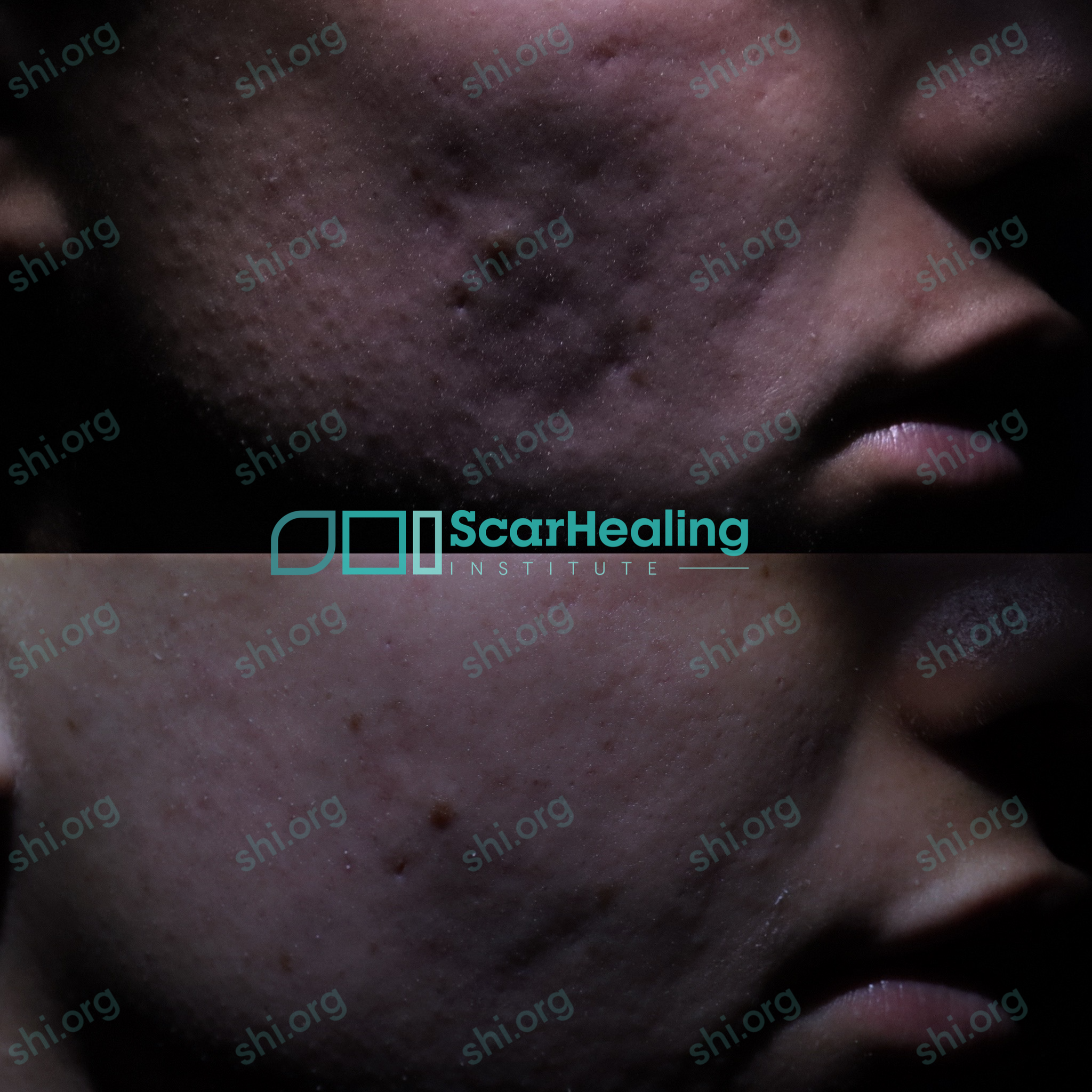
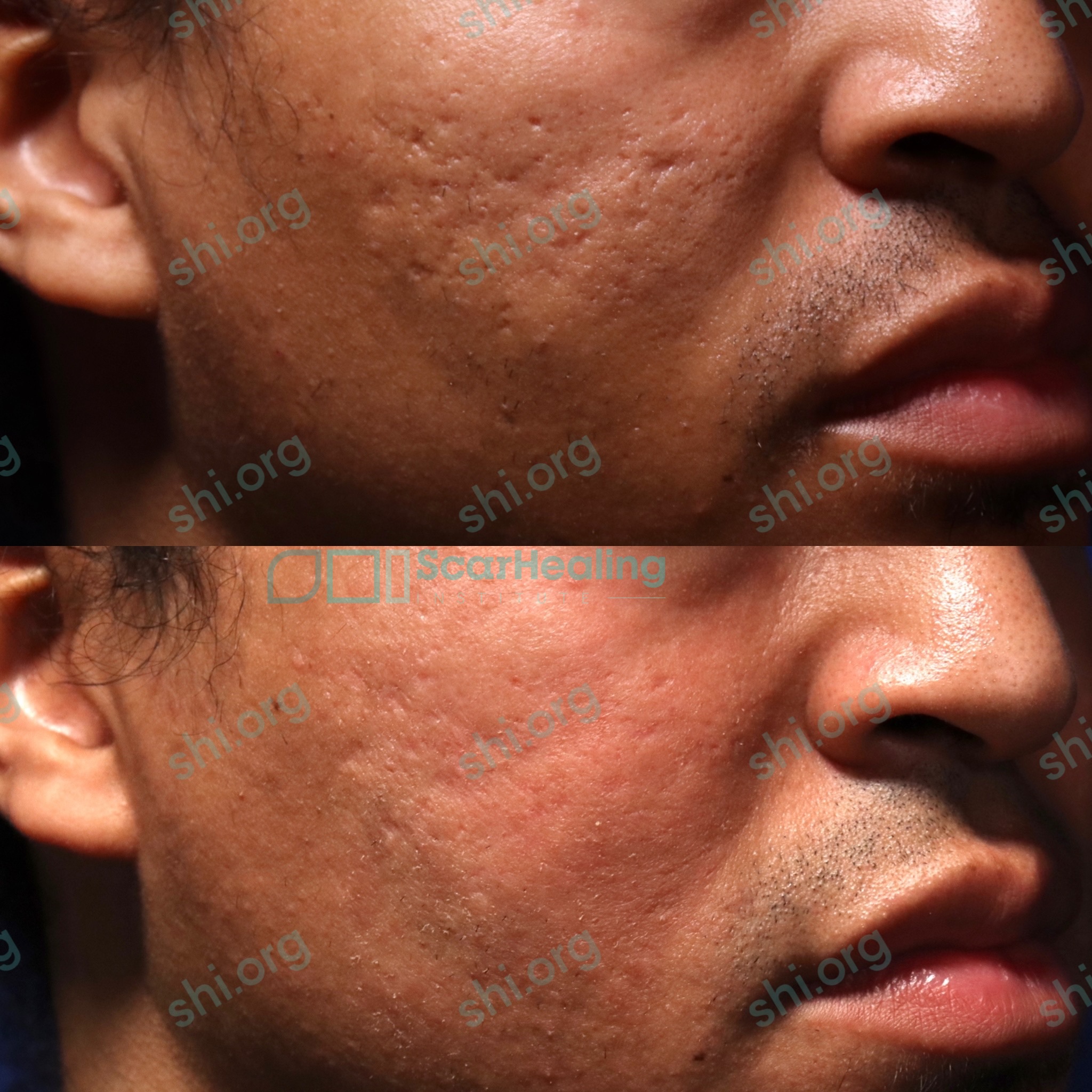
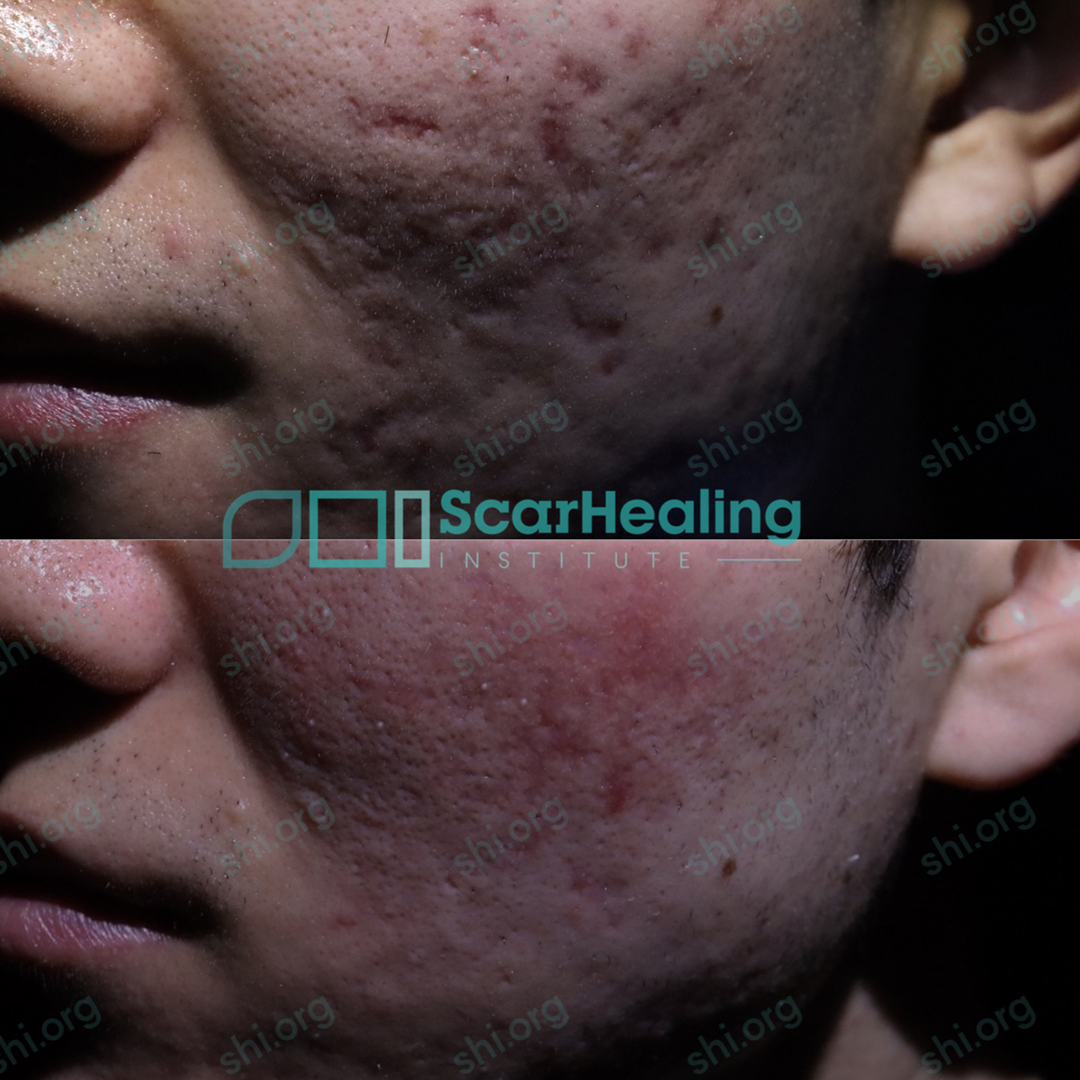
What Change Looks Like: Before & After Photos

Which Acne Scars Do You Have? We Treat Them All

Icepick Acne Scars

Icepick acne scars are deep, V-shaped scars that look as though someone punctured the skin with an ice pick—as the name suggests. These marks are fairly narrow, but because of their depth, are notoriously difficult to treat. We offer a variety of treatments at the Scar Healing Institute, but our signature SHI CROSS treatment is known to be particularly effective for icepick scarring.

Boxcar Acne Scars

Boxcar scars form wide, crater-like depressions with well-defined, sharp edges that make them appear prominent on the skin. While they are more shallow than icepick scars, they can be incredibly bothersome. They typically form when the skin loses collagen while healing acne lesions, leaving behind an atrophic indentation. Acne scar treatments like dermabrasion and subcision are commonly used to reduce their appearance and even skin texture.

Rolling Acne Scars

Rolling acne scars are another common type of atrophic scar, but unlike boxcar scars, they have a rolling, undulating texture rather than distinct, sharp-edged indentations. Rolling scars typically occur over a larger surface area when there is a loss of skin tissue beneath the surface, making the skin appear uneven or bumpy. Treatments like subcision and laser therapy can help by stimulating collagen production and smoothing the skin’s surface.

Get Clear, Smooth Skin With Our Advanced Acne Scar Treatments in Santa Ana

Laser Scar Treatments

Laser skin resurfacing uses concentrated energy beams to boost cell turnover and collagen production, improving scar appearance. At the Scar Healing Institute, we offer non-ablative lasers for pigmentation and ablative lasers for texture concerns. Popular options include CO2, Fotona 4D, Er:YAG, and Nd:YAG lasers, each suited for specific scar types. These treatments are especially effective for raised scars and often serve as a finishing step for acne scar correction, with multiple sessions sometimes needed for optimal results.

CROSS Treatments

Chemical Reconstruction of Skin Scarring (CROSS) is a targeted technique based on chemical peels, where a provider uses a fine applicator to place high-strength phenol or trichloroacetic acid (TCA) directly into each acne scar. This triggers collagen production to restore lost volume in atrophic areas. Because CROSS treats only the scars—not the full face—it allows for faster healing and lower risk. After treatment, the skin is delicate and must be protected from sun exposure. While rare, pigmentation changes or scar widening can occur if done improperly, which is why our trained SHI CROSS professionals prioritize precision and safety.

Acne Scar Subcision

Subcutaneous incisionless surgery (subcision) uses a hypodermic needle or cannula in a fan-like motion beneath the skin to break up fibrous bands, releasing scar tissue and triggering collagen production to restore volume. It can be tailored to treat scars at various depths, with local numbing and tumescent anesthesia used for comfort. For severe cases, our SHI LIFT™ technique incorporates the patented Hazany Liberator™. Swelling, redness, and soreness are common early on, with full results typically visible after two months.

Dermabrasion

Dermabrasion is a cosmetic procedure that involves the mechanical exfoliation of the skin’s surface to remove damaged or rough layers. It is typically used to treat skin conditions such as acne scars, wrinkles, sun damage, and other types of skin imperfections. During the procedure, a special device with a rotating brush or abrasive tool is used to “sand” the outermost layer of skin. Dermabrasion stimulates natural healing and collagen production, leading to smoother, more even skin. Recovery can be intensive, often involving redness, swelling, and some discomfort as the skin repairs itself.

Punch Excision

Punch excision is a surgical technique used to treat deep acne scars, like icepick or boxcar scars. It involves using a small, circular tool to remove the scar tissue, followed by stitching the skin together. The procedure is typically done under local anesthesia, and over time, the skin heals to create a smoother, more even texture. It’s often combined with other treatments for optimal results and is effective for isolated, deep scars.

Injectable Fillers

The Scar Healing Institute offers a range of injectable treatments for acne scars, including our signature SHI STIM procedure. This treatment uses poly-l-lactic acid (PLLA), commonly known as Sculptra, to stimulate collagen production. A common misconception is that Sculptra acts as a dermal filler, but it’s actually a biostimulant. Instead of creating volume artificially, Sculptra encourages your body to produce its own collagen, helping to refresh and restore the skin’s appearance.

How Much Does Acne Scar Treatment Cost in Santa Ana?

Pricing for acne scar treatment varies based on factors like treatment type, scar severity, and provider expertise.

For example, three-layer subcision and dermabrasion are much more complex and thus more expensive than less invasive injections. Some treatments may require follow-up sessions, which can add to the overall cost. Unfortunately, insurance typically does not cover cosmetic procedures like acne scar treatments. However, to keep care within reach, we offer financing through Cherry, Alphaeon, and CareCredit.

Book your consultation with the Scar Healing Institute now to get a detailed pricing breakdown for your personal acne scar treatment!

Scar Healing Pattern

A Look Inside Your Personalized Acne Scar Treatment Plan

During your acne scar consultation, our expert providers will evaluate the type, depth, and severity of your scars. You’ll have the opportunity to discuss your goals, concerns, and medical history, helping the provider recommend a personalized treatment plan. They’ll explain the expected results, potential side effects, and healing time, and also outline the costs and number of sessions required. You’ll be able to ask any questions before proceeding.

We’ll also review the necessary preparatory steps for your treatment, which may include pausing certain skincare products or using a lightning cream, depending on the procedure.

Aftercare That Matters: How to Maintain Your Results

Aftercare That Matters: How to Maintain Your Results

Proper aftercare is essential after scar treatment to promote optimal healing and results. This typically involves keeping the skin clean and moisturized, avoiding sun exposure, and not picking or scratching the treated area. You may also need to steer clear of harsh skincare products, makeup, and intense physical activity for a while.

For more advanced treatments, such as SHI LIFT, there will be extra instructions regarding suctioning, massaging, and wearing a facial compression garment. Adhering to your provider’s guidance and being patient throughout the healing process are crucial for achieving the best outcome.

Why Scar Healing Institute is the Leader in Acne Scar Treatments in Santa Ana

Choosing the Scar Healing Institute means getting expert-led, personalized care. Our team uses advanced treatments—like laser therapy, microneedling, dermal fillers, or custom combinations—tailored to your scar type, skin tone, and goals. We start with a thorough evaluation of your skin and medical history, then build a plan designed just for you.

We don’t believe in one-size-fits-all care. From your first consultation to post-treatment support, we’re here to guide you through every step with clarity, compassion, and proven results.

Why Our Treatments Work for All Skin Types and Ethnicities

Santa Ana is a vibrant, multicultural city with a strong Hispanic community and a diverse mix of skin tones and backgrounds. At the Scar Healing Institute, we’ve helped patients of all complexions—fair, olive, and melanin-rich—achieve smoother, more even skin.

Our inclusive, personalized approach ensures every treatment is tailored to your skin’s unique needs, reducing the risk of hyperpigmentation. By adjusting techniques to suit your skin biology, we deliver safe, effective results that respect and enhance your natural complexion.

Anisha Scar Healing Institute

Schedule Your Acne Scar Treatment Consultation Today

The Scar Healing Institute is dedicated to helping patients like you achieve radiant, glowing skin. Our team of scar specialists is constantly developing and innovating new treatments to effectively target acne scarring. No matter if your scars are from childhood or if they just appeared, we have a solution for you. Begin your scar healing journey and schedule your acne scar treatment consultation in Santa Ana today.

What to Know Before You Start Your Acne Scar Journey

Improvement is often visible within a few weeks, but most treatments continue improving your skin for many months after. Some procedures may require multiple sessions with the interval between depending on your skin’s response. Full recovery and significant improvements usually take time, and your specialist will offer detailed guidance on what to expect based on your individual needs and treatment plan.

We prioritize patient comfort at the Scar Healing Institute. The level of discomfort during acne scar treatments varies depending on the type of treatment being used and your personal pain tolerance. Therefore, we will work to find the ideal numbing option for you. During recovery, pain can typically be alleviated with over-the-counter pain relievers.

The results of acne scar treatment can be long-lasting, but they may not be completely permanent. While treatments can significantly improve the appearance of scars, skin naturally changes over time due to factors like aging, sun exposure, and lifestyle habits. In some cases, you may need touch-up treatments or maintenance sessions to maintain the best results. Your specialist will provide guidance on how to care for your skin post-treatment to maximize the longevity of your results.

We recommend getting your active acne under control before starting acne scar treatment to avoid the formation of new scars during the process. Treating both old scars and active breakouts simultaneously could lead to a cycle of constant treatment and breakouts. Stabilizing your skin first will ensure better, longer-lasting results.

Addressing active acne early and tackling its underlying causes is key to preventing new scars. Lifestyle and dietary changes can make a noticeable difference in improving skin health. At the Scar Healing Institute, we provide treatments for active acne, such as anti-inflammatory injections and medical-grade facials. Additionally, avoiding picking at acne lesions and using sun protection regularly will help prevent further skin damage.

Acne scars develop when the skin undergoes substantial inflammation from acne. The severity and duration of the breakout, as well as whether the acne is picked or squeezed, can heighten the likelihood of scarring. Deeper acne lesions, such as cysts, typically cause greater skin damage, leading to more prominent scars. Additionally, genetics and skin type play a role in how the skin heals and whether scarring will occur.